

Blogs
What Happens During A Fire Sprinkler Inspection

You have an inspection scheduled for your building, and if you are being honest, you are not totally sure what is about to happen. That is completely normal. Most property owners in New York City know they need regular fire sprinkler inspections, but very few actually know what the technician does once they walk through the door.
The good news is that once you understand the process, it stops feeling like a mystery and starts feeling like a routine part of running a safe building. Let us walk through exactly what happens during a fire sprinkler inspection, from the moment your technician arrives to the final report that lands in your inbox.
Two Types of Inspections You Will Run Into
Before we get into fire sprinkler inspection, it helps to know there are two main types you will deal with. The first is your annual inspection, which is the standard yearly checkup your system needs to stay compliant. The second is the five-year inspection, which digs a lot deeper. These more intensive visits sometimes involve opening up parts of the system to check what is happening on the inside, not just what you can see from the floor.
The Visual Check Comes First
Your technician starts with a walkthrough of the entire property. They are looking at every sprinkler head, every pipe, every hanger, and every valve for anything that looks off. Corrosion, physical damage, missing parts, or paint buildup on a sprinkler head are all things they are trained to spot right away. This step alone catches a surprising number of issues before they ever become real problems.
Functional Testing Puts the System to Work
Next comes functional testing. Your technician will simulate activation of certain components without actually discharging water everywhere. This confirms that the parts of your system that are supposed to respond during a real fire will actually do their job when the moment comes, without putting your building through an unnecessary soak.
Checking Water Flow and Pressure
Water without pressure does not put out a fire. That is why your technician runs a main drain test to confirm your system is getting the flow it needs. This step verifies that water can actually reach every sprinkler head at the pressure required to knock down flames, not just trickle out.
The Control Valve Gets Special Attention
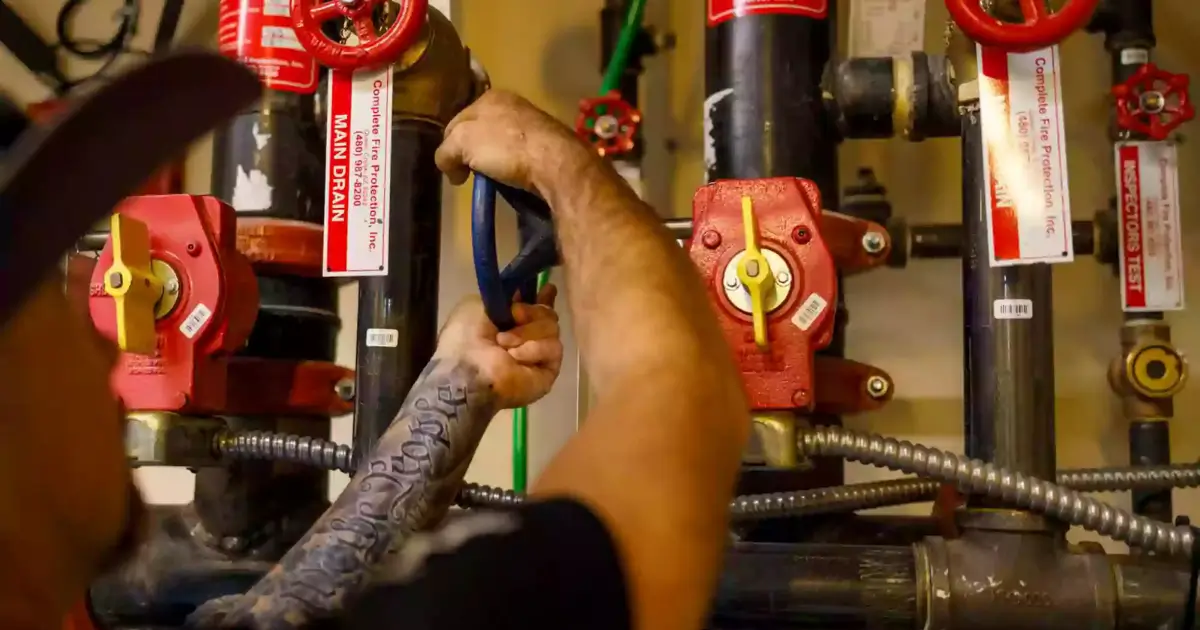
One of the very first things checked during any fire sprinkler inspection is the control valve. Technicians confirm it is fully open and has not been tampered with because a closed or partially closed valve can block water flow to the entire system during an emergency. It sounds like a small detail, but it is one of the most common causes of sprinkler failure.
What Inspectors Commonly Find
Even well-maintained systems turn up a few surprises. Corrosion inside older pipes, small leaks around fittings, obstructions blocking a sprinkler head, or a control valve that has drifted out of position are all common finds. None of these are usually catastrophic on their own, but left unchecked, they add up.
If Something Fails Along the Way
If your technician finds a real deficiency, they will not just leave you with a vague note. You will get a deficiency report outlining exactly what needs attention and why, so you can move forward with repairs quickly and keep your building compliant.
Now You Know What To Expect
Understanding what happens during a fire sprinkler inspection takes the guesswork out of the process and makes it a lot easier to prepare your building and your team. If you are due for an inspection, Inspector Sprinkler can walk you through every step, right here in New York City.